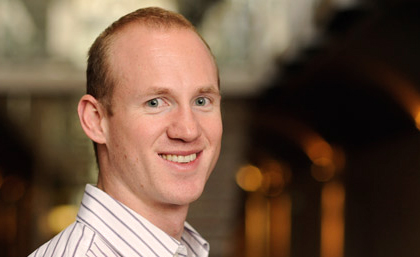


Dr Amy Price
The Gift of Evidence
The greatest gift Evidence-Based Health Care bestows is the power to critically appraise Health Science. I learned from Oxford that the most powerful teaching is that which we can put into daily practice and help others to do the same.
Sharing evidence requires building relationship and developing trust. We are taking others to a new place. They may be blind to knowledge and a little afraid. When we deliver the branch of knowledge we can share it like a lifeline or use it for a stick. When we beat with the stick of superiority, authority and argument the experience of evidence is avoided. Yet when we share evidence as discovery and answers, people everywhere seek it.
We are fortunate to live in the age where technology, communication and knowledge is accessible.
Evidence lives when it is delivered in bite-sized pieces where we are shown the recipe, the ingredients are made available and the learning we need is targeted and just in time. It helps when we say just enough. A great example is the single statement in the BMJ which asks, “Were patients or the Public involved in this research?” Prospective authors know that this is something they need to consider and it is up to them to find ways to do this. This one statement is more powerful than many warnings. The BMJ has also recently implemented patient reviewers to work side by side with traditional reviewers. You can join here.
The Culture of Health is the task of a lifetime. Evidence learned and applied can heal that which has broken. This is the future we own and shape.
In sharing about research knowledge we can stir the pot just by asking, “What evidence brought your thinking to this place? If it is good, we can encourage and multiply what is found and if it is faulty we can suggest alternatives and be ready to answer the whys.
For Life or Disaster: Two Evidence Communicators
The National Elf Service
It is evidently impossible for health and social care professionals in most fields to keep up to date with the torrent of high quality evidence now being published. The sheer volume of quality research is, of course, something very much to be celebrated, but if practitioners cannot absorb all of the important new knowledge, then patients do not benefit. Nor is it reasonable to demand that practitioners demonstrate continuous professional development without some way of navigating this sheer volume of research. [André Tomlin 2015]
The National Elf Service article, Mental health research: let us reason together #RCTdebate The elves and I co-authored acted as a vehicle to open doors of opportunity and understanding between academic researchers, clinical trial advocates. mental health service users and the public. There is still ongoing discussion and collaboration even five months later. The Elves were recently recognized by The Lancet for their work in the mental health community. You can attend the National Elf Service and BMJ pre-workshop to learn the best ways to communicate science and critically appraise a research paper.
Making Evidence Live: Introduction to Social Media and Blogging
0900-1700 Tuesday 21st June, Oxford
This fun hands-on workshop will equip you with the skills you need to:
- Critically appraise an important piece of new research
- Blog about the evidence in an accessible way
- Discuss the evidence on Twitter and other social media
Blogs and social media are an essential part of science communication and evidence-based practice in the 21st century. Find the best ways to use these tools to keep up to date with the latest reliable research and how to maximize your online impact.
Evidence Aid
Evidence Aid is at Evidence Live 2016 and was formed in 2004 to enable the reception of humanitarian aid in the most timely, effective and appropriate fashion and to inspire and enable those guiding the humanitarian sector to apply an evidence-based approach in their activities and decisions.
You can’t know when you will be faced with a disaster but now you know where to find practical [p]help. Evidence Aid offers lay friendly and professional level evidence for humanitarian disasters. During Hurricane Andrew, I worked with the Red Cross to bring relief. This was the most destructive hurricane to hit in the history of the USA. We were ill equipped. Untrained volunteers were left to improvise about what to do with armed gang members in shelters, domestic violence, supply shortages, and emergency medical care.
With an increasing demand for ‘value for money’, proof of impact, and effectiveness in the provision of humanitarian aid, it is essential to ensure that decisions and activities are evidence-based. This requires an agile organisation with a scientific approach to operate from a robust and responsive network. Evidence Aid collaborates to ensure an evidence centered application and they welcome volunteers, collaborators and end users.
“The job of the human being [in the digital age] is to become skilled at locating relevant valid data for their needs. In the sphere of medicine, the required skill is to be able to relate the knowledge generated by the study of groups of patients or populations to that lonely and anxious individual who has come to seek help” (Sir Muir Gray, 2001)
These organizations have bridged gaps to meet evidence needs for populations and individuals. They build the digital bridge while others still speak of the digital divide.
Cite as Price A (2016): Tools to Communicate Evidence so Others Can Own It CEBMJ /tools-to-communicate-evidence-so-others-can-own-it/ DOI: 10.13140/RG.2.1.4796.9688


 The world loves a nutrition news story but there is a danger to this unrelenting flow of contradictory stories. This week’s superfood is black pudding, hot on the heels of chia seeds and kale. People reading contradictory media stories report being the most confused about what to eat and understandably believe that “scientists keep changing their minds” [1]. Journalistic quality is a contributing factor, with only 6% of a sample of newspaper health stories being based on high quality, authoritative research evidence such as randomized controlled trials or systematic reviews [2]. The academic community also plays a part in this with institutions often overhyping the impact of individual studies to increase press coverage and journal editors and funders doing little to raise the quality of nutrition research [3].


 A recent evaluation by the Lambeth Long Term Conditions Delivery Programme in 2012-13 highlighted a number of key barriers to optimising blood pressure control including poor-adherence and untimely titration of medication1. Evidence from Public Health England suggests that better control of current hypertensive patients can save £120 million of NHS and social care spending over 10 years2.

 Translating evidence into practice, and in turn developing the science of translation is complex, challenging work. Several interrelated disciplines have arisen to address this challenge (e.g., implementation science, knowledge translation, quality improvement, among others) to determine the methods that most effectively get evidence into practice to improve health services and care. While the global objective of these disciplines is essentially the same, their methods, terminology and underlying epistemological frameworks are diverse (although not wholly indistinguishable) (2). Nilsen for example, identified over 40 theories, models and frameworks guiding the design, evaluation and interpretation of implementation studies (3). Lokker and colleagues noted 51 diverse classification schemes for characterizing the content of implementation interventions (4).